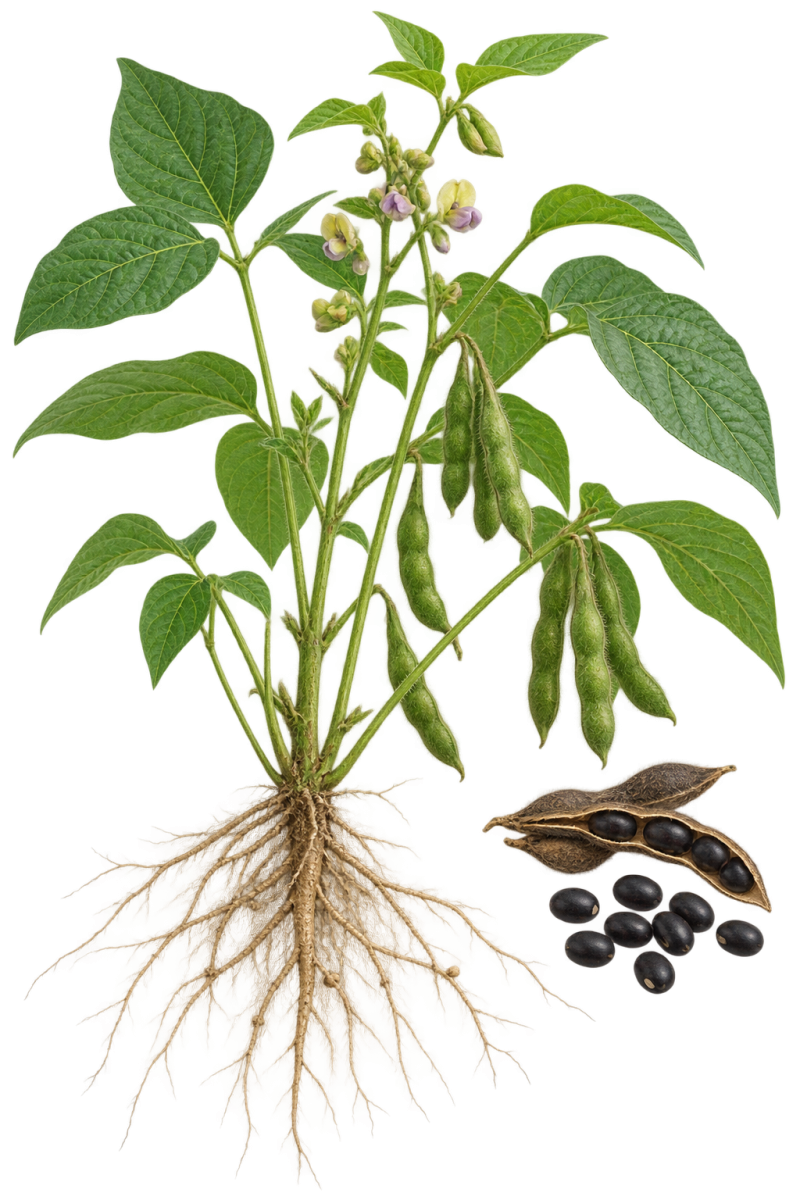
Black Bean (Hei Dou – 黑豆) is a revered medicinal herb in Traditional Chinese Medicine (TCM), belonging to the Fabaceae family. Sweet in flavor and neutral in nature, it enters the Kidney and Liver meridians, nourishing the blood, detoxifying the body, promoting urination, and darkening the hair. Among its varieties, the green-kernel black bean is considered the most medicinally valuable, slightly cold in nature, helping to clear heat, nourish Yin, eliminate dampness, and replenish Kidney essence. According to the Compendium of Materia Medica (Ben Cao Gang Mu), black beans “eliminate toxins, tonify the Liver and Kidneys, and invigorate blood circulation.” In folk medicine, they are often cooked with Polygonum multiflorum (He Shou Wu) to nourish blood and darken the hair, or simmered with salt to enhance vitality and slow aging. Roasted black bean tea is also valued for detoxifying the liver, balancing blood pressure, and improving metabolism. Modern pharmacological studies show that black bean seed coats are rich in anthocyanidins and flavonoids, potent antioxidants that protect the liver, cardiovascular system, and skin. However, individuals with Yang deficiency or cold constitution, or those taking Qi-tonifying herbs such as Panax ginseng or Codonopsis pilosula, should avoid simultaneous use, as black beans may reduce their efficacy. Simple yet profound, the black bean stands as both a nourishing food and a pure herbal tonic, honored in TCM for centuries as a gentle ally in health and longevity.