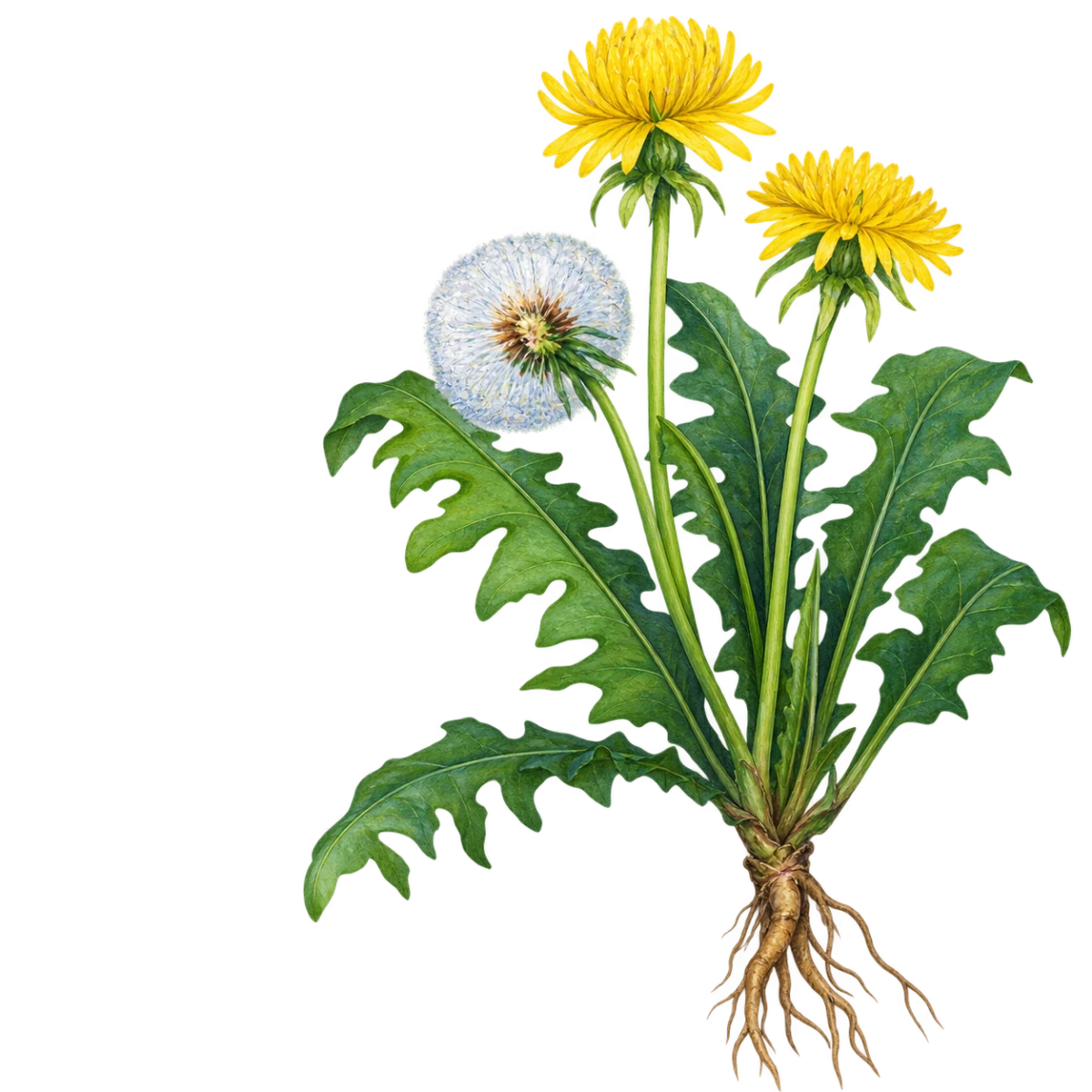
Dandelion (Pu Gong Ying – Taraxacum mongolicum) is a precious traditional Chinese medicinal herb renowned for its actions in clearing heat and toxins, resolving inflammation and abscesses, promoting urination, and protecting the liver. With a sweet–bitter taste and cold nature, it enters the Liver and Stomach meridians, known as a principal herb for treating “heat toxins and suppurative swellings.” Rich in active compounds such as taraxasterol, luteolin, inulin, and β-sitosterol, together with vitamins A, C, and E, Dandelion exhibits strong antioxidant, anti-inflammatory, immunomodulatory, lipid- and glucose-regulating properties. Clinically, it is widely applied to manage mastitis, blocked lactation, boils, abscesses, hepatitis, gallstones, urinary tract infection, mild hypertension, pharyngitis, bronchitis, eczema, and dermatitis, as well as to support cancer therapy, diabetes, and obesity management. Beyond its medicinal value, Herba Taraxaci is also consumed as a nutritious food and herbal tea, promoting detoxification, liver protection, and gentle sedation for better sleep. Combining classical Eastern medical wisdom with modern pharmacological evidence, Dandelion today stands as a comprehensive natural remedy and functional food that supports holistic wellness and chronic disease prevention in modern lifestyles.
Bu Gu Zhi (Cullen corylifolium (L.) Medik., syn. Psoralea corylifolia L.), commonly known as Babchi or Bakuchi seed, is a traditional Chinese medicinal herb renowned for its Kidney-Yang tonifying, Spleen-warming, and essence-preserving effects. The dried seeds, with a bitter-acrid taste and warm nature, enter the Kidney, Spleen, and Pericardium meridians. In Traditional East Asian Medicine, it is prescribed for impotence, spermatorrhea, frequent urination, chronic diarrhea, lumbar weakness, vitiligo, psoriasis, and general deficiency or aging syndromes. Modern pharmacological studies have identified key bioactive compounds—bakuchiol, psoralen, isopsoralen, isobavachalcone, and various flavonoids and terpenes—responsible for its anti-inflammatory, antioxidant, osteogenic, immunomodulatory, and skin-rejuvenating properties. Bakuchiol, in particular, is widely used in dermatology and cosmetics as a natural alternative to retinol. Clinical and laboratory evidence also supports Bu Gu Zhi’s potential in improving bone metabolism, cardiovascular function, hormone balance, and anti-tumor activity. With its dual legacy of ancient wisdom and modern validation, Bu Gu Zhi stands as a bridge between traditional Oriental medicine and contemporary integrative health science. Proper dosage and caution are advised, as the herb should be avoided in patients with Yin deficiency with heat, urinary tract inflammation, or constipation.
He Shou Wu (Red Fleeceflower Root) is a treasured herb in Traditional Chinese Medicine, known for nourishing the Liver and Kidneys, revitalizing hair, boosting energy, and promoting longevity.