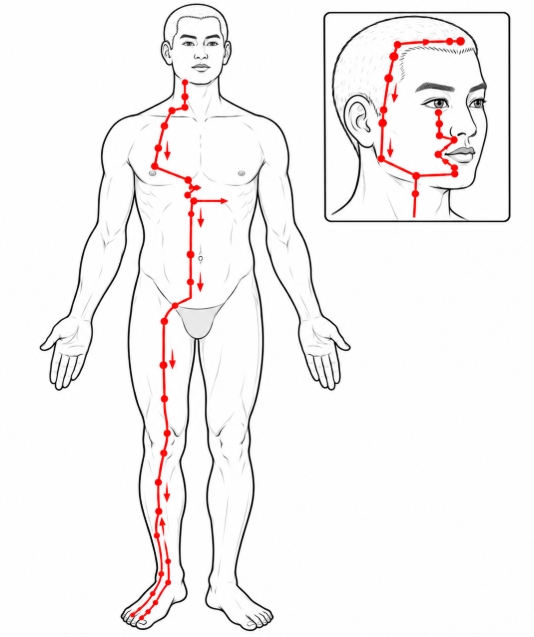
In Traditional Chinese Medicine (TCM), the Stomach Meridian (足阳明胃经, Zú Yáng Míng Wèi Jīng) is one of the 12 primary meridians. It is a Yang meridian that works closely with its paired Yin meridian, the Spleen Meridian, to regulate digestion and ensure the body receives nutrients and energy from food.
The Spleen Meridian (also known as the Foot Taiyin Spleen Meridian, 足太陰脾經) is one of the twelve primary meridians in Traditional Chinese Medicine (TCM). It is classified as a yin meridian and is closely associated with the Spleen and its functions in the body.
The Small Intestine Meridian (also known as the Hand Taiyang Small Intestine Meridian, 手太阳小肠经) is one of the 12 primary meridians in Traditional Chinese Medicine (TCM). It is a Yang meridian, paired with the Heart Meridian (a Yin meridian). Together, the Heart and Small Intestine are closely connected in TCM, not only for their physical functions but also for their influence on mental and emotional health.
The Kidney Meridian (also known as the Foot Shaoyin Kidney Meridian, 足少阴肾经) is one of the 12 primary meridians in Traditional Chinese Medicine (TCM). It is a Yin meridian and is closely paired with the Bladder Meridian, which is its corresponding Yang meridian.
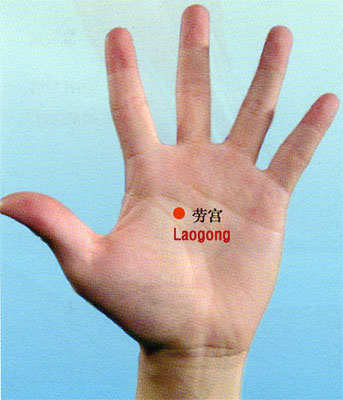
The Pericardium Meridian (also known as the Hand Jueyin Pericardium Meridian, 手厥阴心包经) is one of the 12 primary meridians in Traditional Chinese Medicine (TCM). It is a Yin meridian that serves as the protective shield of the Heart and is closely related to emotional and cardiovascular health.
The Bladder Meridian (also known as the Foot Taiyang Bladder Meridian, 足太阳膀胱经) is one of the 12 primary meridians in Traditional Chinese Medicine (TCM). It is a Yang meridian and is closely connected with the Kidney Meridian, which is its paired Yin meridian.
The Large Intestine Meridian (also known as the Hand Yangming Large Intestine Meridian, 手阳明大肠经) is one of the 12 primary meridians in Traditional Chinese Medicine (TCM). It is a Yang meridian, paired with the Lung Meridian (a Yin meridian). Together, they form a Yin-Yang relationship that plays a critical role in the health of the respiratory and digestive systems.
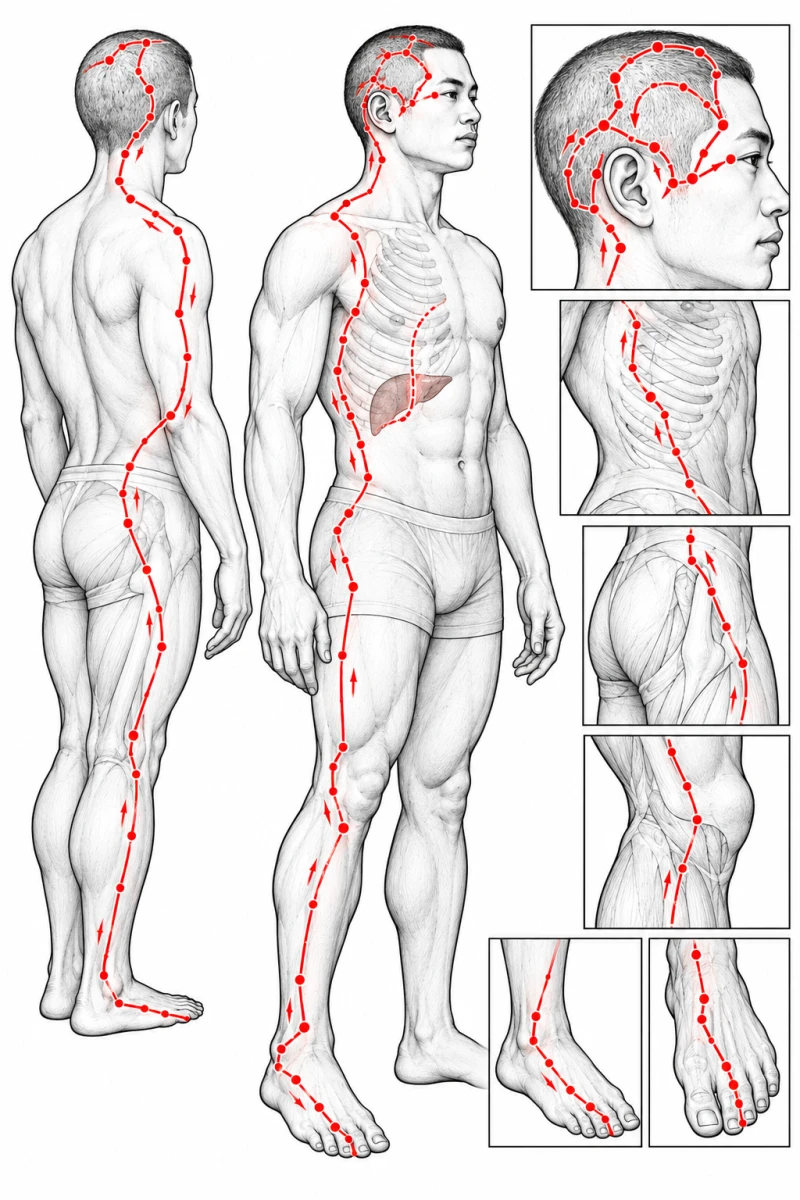
The Gallbladder Meridian (also known as the Foot Shaoyang Gallbladder Meridian, 足少陽膽經) is one of the 12 primary meridians in Traditional Chinese Medicine (TCM). It is a Yang meridian and is closely related to the Liver Meridian, with which it forms a Yin-Yang pair.
The Lung Meridian (also known as the Hand Taiyin Lung Meridian, 手太阴肺经) is one of the 12 primary meridians in Traditional Chinese Medicine (TCM). It is a Yin meridian and is paired with the Large Intestine Meridian (a Yang meridian). The Lung Meridian is responsible for respiration, distributing Qi (energy), and regulating water metabolism.
The Heart Meridian (also known as the Hand Shaoyin Heart Meridian, 手少阴心经) is one of the 12 primary meridians in Traditional Chinese Medicine (TCM). It is a Yin meridian and is paired with the Small Intestine Meridian (a Yang meridian).