Xiabai (LU-4) is an acupuncture point of the Hand Taiyin Lung Meridian, known for its ability to descend Lung Qi, open the chest, regulate respiration, and relieve upper-arm pain. It is commonly applied in conditions such as cough, chest oppression, dyspnea, asthma, as well as biceps and shoulder-to-arm pain along the Lung meridian pathway.
Tianfu (LU 3) is the Jing-River point of the Lung Meridian, located on the anterolateral upper arm. Known as the “Heavenly Storehouse,” it regulates Lung Qi, clears heat, descends rebellious qi, and harmonizes emotional disturbances related to Lung imbalance. LU 3 is commonly used for cough, throat disorders, asthma, dyspnea, upper arm pain, and heat rising symptoms.
Yunmen (LU-2) is the second point of the Hand Taiyin Lung Meridian, located in the depression beneath the lateral end of the clavicle, positioned above Zhongfu (LU-1). Situated in the upper chest region and closely associated with the dispersing and descending functions of the Lung, this point helps disperse Lung Qi and descend rebellious Qi, thereby alleviating cough, shortness of breath, chest tightness, and obstruction of Lung Qi. When stimulated with proper technique, Yunmen also helps relieve tension in the anterior shoulder and pectoral region, relaxes the surrounding musculature, and improves local Qi and blood circulation. It is beneficial for respiratory disorders as well as discomfort or pain around the shoulder–clavicular area.
Zhongfu (LU-1) is the Front-Mu Point of the Lung, located on the upper anterolateral chest. It disseminates and descends Lung Qi, transforms phlegm, opens the chest to relieve dyspnea, supports respiratory disorders, regulates fluid metabolism, and promotes healthy skin.
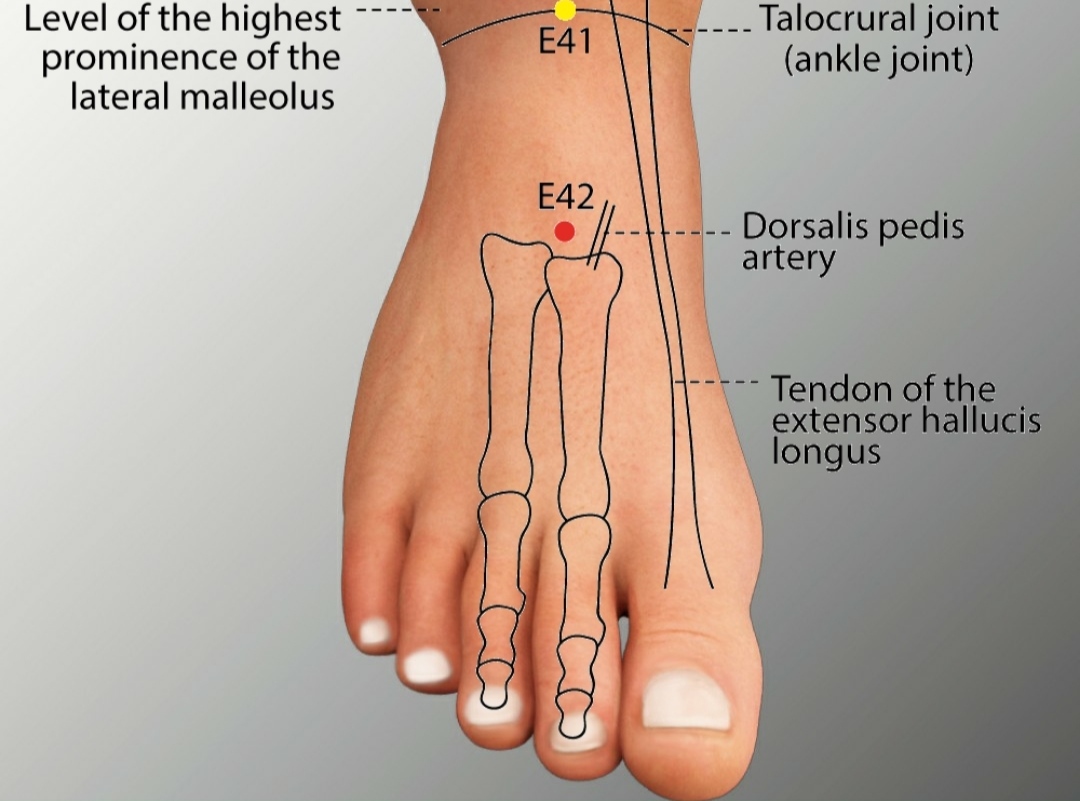
Chongyang (ST-42), the Yuan-Source point of the Stomach channel, is located on the dorsum of the foot between the 2nd and 3rd metatarsal bones over the dorsalis pedis artery. It harmonizes the Stomach, transforms dampness, calms the Shen, and is indicated for foot pain, paralysis of the lower limbs, toothache, facial paralysis, epilepsy, and mental disorders.
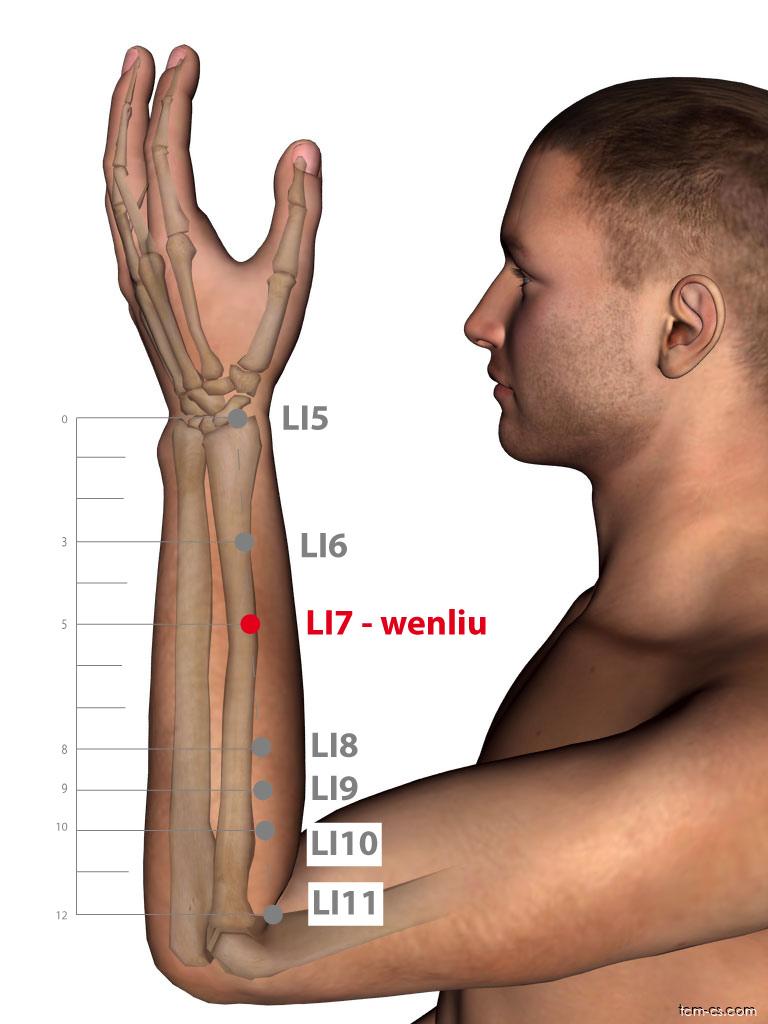
Wenliu (LI-7), the Warm Flow point of the Large Intestine meridian, is the Xi-Cleft point located 5 cun above LI-5 on the line to LI-11. It warms the channel, promotes circulation, dispels cold, and is indicated for stomatitis, glossitis, parotitis, mental disorders, throat swelling, toothache, and pain of the back, shoulder, and arm.
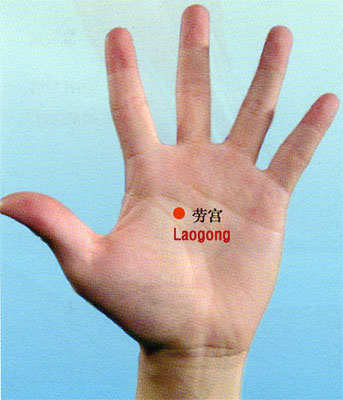
Laogong (PC8), the Labor Palace point, lies at the center of the palm on the Pericardium meridian. As a Ying-Spring Fire point, it clears Heart fire, calms the Shen, revives consciousness, and is applied in treating palpitations, epilepsy, mental disorders, oral ulcers, gingivitis, hiccups, palmar eczema, and excessive sweating of the hands.
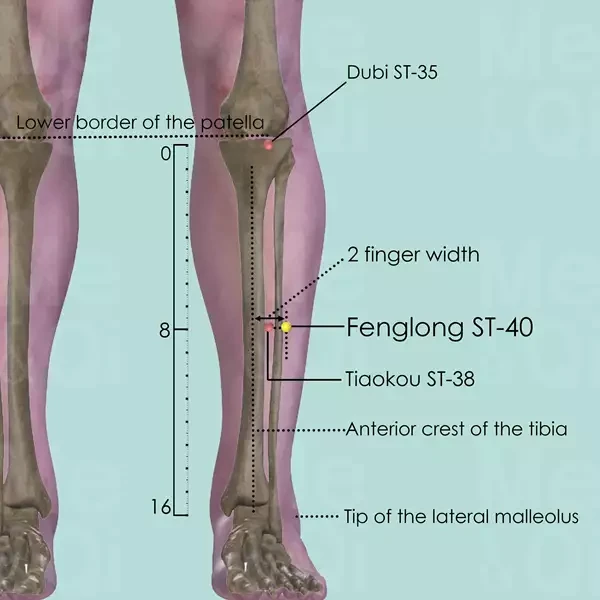
Fenglong (ST40) is the key acupoint for resolving phlegm, strengthening the Spleen, improving digestion, reducing anxiety, insomnia, and treating obesity.
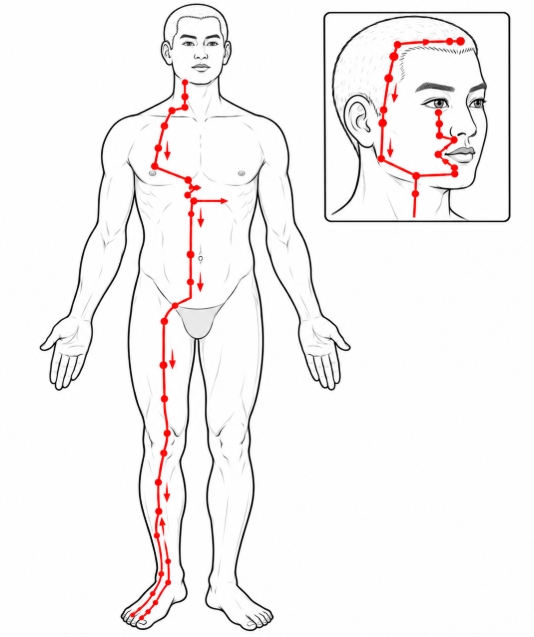
In Traditional Chinese Medicine (TCM), the Stomach Meridian (足阳明胃经, Zú Yáng Míng Wèi Jīng) is one of the 12 primary meridians. It is a Yang meridian that works closely with its paired Yin meridian, the Spleen Meridian, to regulate digestion and ensure the body receives nutrients and energy from food.