Introduction
Digestive disorders such as peptic ulcer disease, gastroesophageal reflux disease (GERD), and irritable bowel syndrome (IBS) not only cause symptoms within the gastrointestinal tract but may also be associated with upper limb musculoskeletal problems such as shoulder arthritis and even arm muscle atrophy. An increasing number of modern medical studies have been exploring the connection between the digestive system and the musculoskeletal system. This report summarizes the possible biological, neurological, and immunological mechanisms explaining this relationship (including the viscerosomatic reflex hypothesis), and presents some statistical and epidemiological evidence on the association between gastric diseases and shoulder–arm disorders.
Neurological Mechanism: Viscerosomatic Reflex
One proposed mechanism for this relationship is the viscerosomatic reflex, in which painful or inflammatory stimuli from a visceral organ trigger reflex changes in the corresponding musculoskeletal structures via the nervous system. Sensory nerve fibers from the viscera and from the skin/muscles converge at the spinal cord, leading to referred pain or muscle spasm in specific regions. For instance, pain caused by myocardial ischemia can radiate to the left shoulder or jaw instead of being confined to the chest (Bath & Owens, 2025).
Similarly, abdominal visceral diseases can produce shoulder pain: for example, hepatobiliary disorders often cause pain in the right shoulder or supraclavicular region due to stimulation of the phrenic nerve (Bath & Owens, 2025). Notably, there have been case reports of benign gastric ulcers presenting solely with shoulder pain—i.e., shoulder pain as a reflex manifestation of a gastric ulcer (Valenzuela et al., 1989). Even complications of gastric ulcer, such as perforation, can irritate the diaphragm, leading to sharp pain in one or both shoulders (a sign of referred pain) (Vakil, 2025).
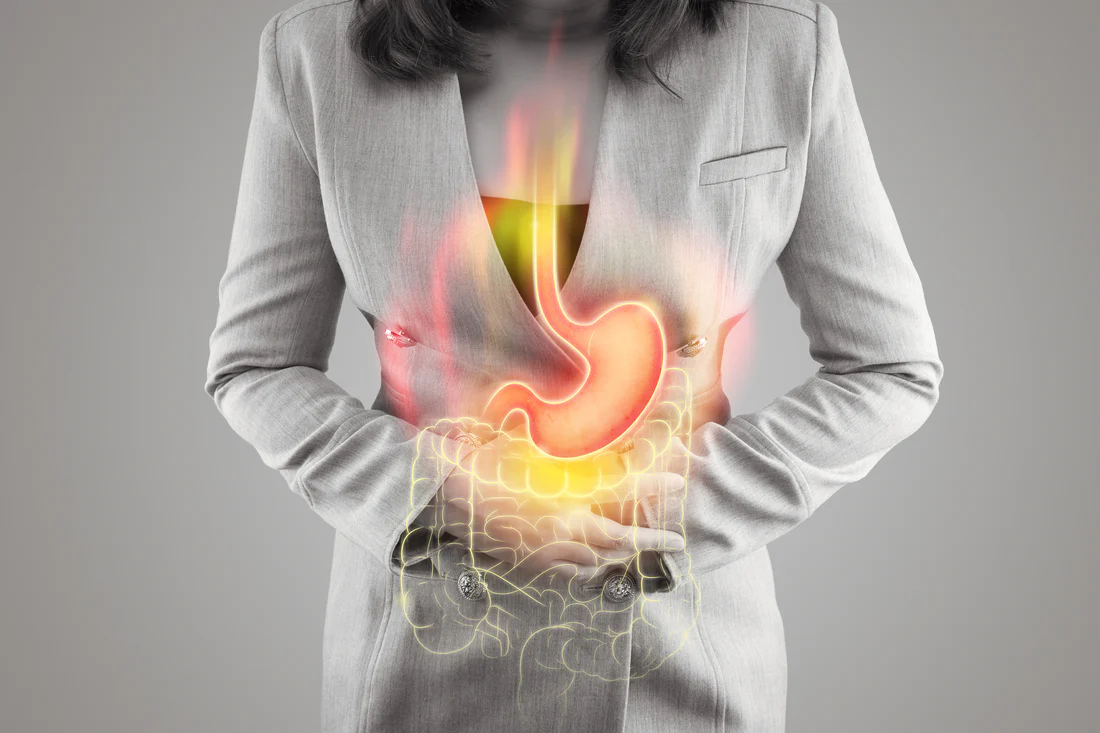
These viscerosomatic reflexes explain why individuals with gastric disorders may sometimes experience pain in the shoulder or upper back, even though the actual lesion is located in the gastrointestinal tract.
A map of referred pain areas caused by visceral organs on the body shows that each color corresponds to the pain region associated with a specific internal organ; the pain is perceived at a location distant from the affected organ. For example, the stomach can produce a sensation of pain in the mid-back region; the liver and gallbladder can cause pain radiating to the right shoulder; and irritation of the diaphragm or pulmonary conditions often produce pain in the upper shoulder region.
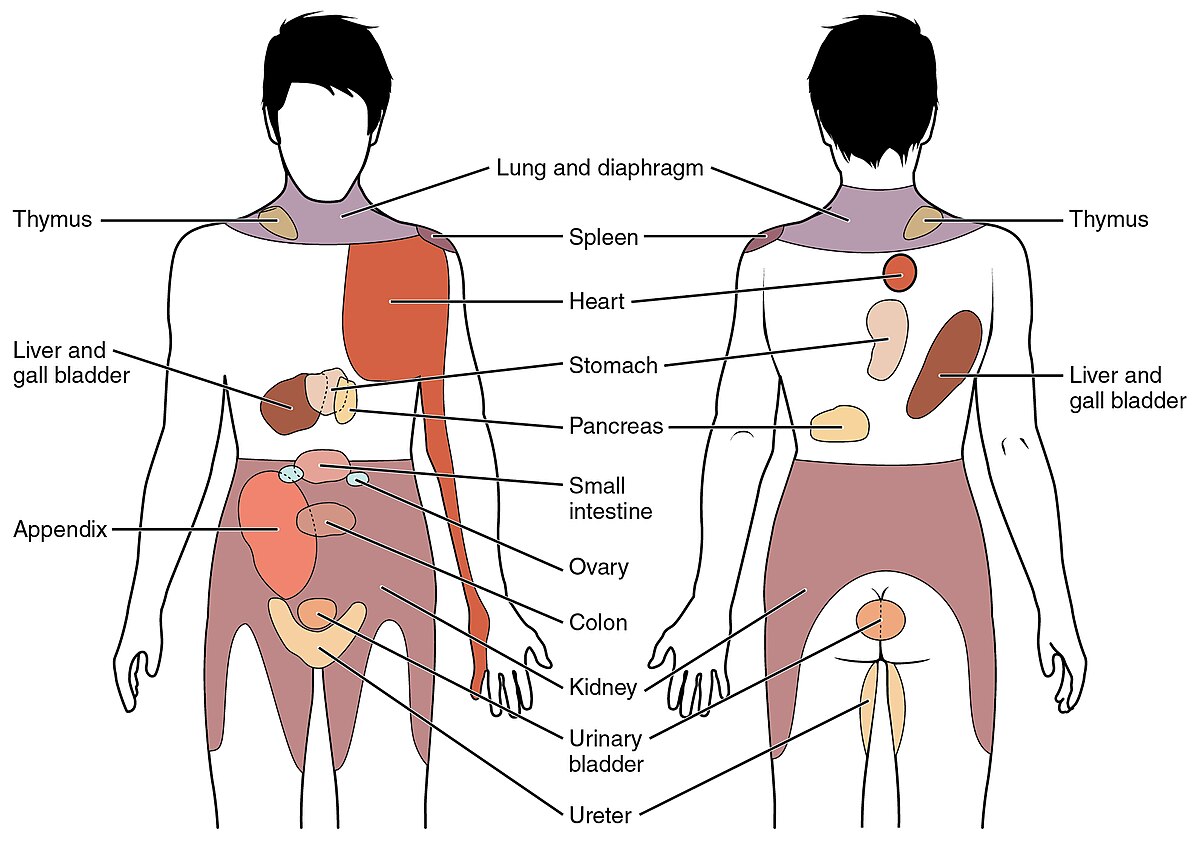
Figure 1 illustrates the pattern of referred pain regions from various internal organs (OpenStax College, 2013).
The viscerosomatic reflex not only causes pain but also affects muscle tone in the related area. Prolonged visceral stimulation may lead to protective muscle hypertonicity (muscle spasm) in the acute phase, but in chronic stages the muscle can transition to a flaccid, weakened, or fibrotic state (Bath & Owens, 2025). This means that a chronic gastric condition may cause muscle spasm and pain in the neck–shoulder region initially, followed later by decreased muscle tone and even mild muscle atrophy in that area if the reflex persists. This phenomenon partly explains indirect arm muscle atrophy: when pain and spasm are prolonged, the patient tends to move the shoulder–arm less, and over time the muscles can atrophy due to insufficient use.
Immune and Systemic Inflammatory Mechanism
In addition to the neurological mechanism, systemic inflammatory and immune responses triggered by gastrointestinal diseases can also affect joints and muscles. Many studies suggest that chronic inflammation in the gastrointestinal tract (caused by infection or microbiota imbalance) can generate circulating inflammatory cytokines, increasing the susceptibility of joints and muscles to injury or degeneration.
A typical example is Helicobacter pylori infection (the bacterium responsible for peptic ulcer disease): a 17-year cohort study involving approximately 97,500 individuals in Taiwan found that H. pylori infection significantly increased the risk of rheumatoid arthritis (RA) (Lee et al., 2023).
Specifically, the H. pylori-infected group had a higher incidence of RA than the control group, particularly among women under 30 years old, suggesting that chronic gastric infection may trigger an autoimmune response targeting the joints. The proposed mechanism is that H. pylori causes prolonged immune stimulation: inflamed gastric mucosa releases large amounts of cytokines, recruits white blood cells (neutrophils, lymphocytes), and continuously produces antibodies, creating persistent antigenic stimulation that leads to autoimmune responses in genetically susceptible individuals (Lee et al., 2023).
This implies that joints (such as the shoulder joint) may be affected by systemic inflammation originating from the stomach.
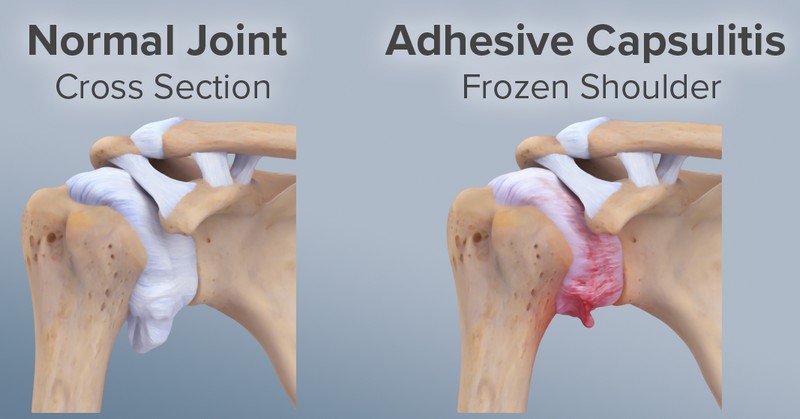
Not only bacterial infections but also GERD (gastroesophageal reflux disease) itself is considered a chronic inflammatory condition of the esophagus and stomach. A study in Italy (Cucchi et al., 2020) found that the presence of GERD increased the risk of adhesive capsulitis (frozen shoulder) after rotator cuff repair surgery. Specifically, patients with GERD had a rate of postoperative adhesive capsulitis approximately 5.3 times higher than those without GERD (OR ≈ 5.265). The authors suggested that GERD may be accompanied by a nonspecific systemic inflammatory state, characterized by elevated TNF-α and TGF-β expression and retinoid (vitamin A) metabolism disturbances, which in turn promote fibrosis and adhesion in the shoulder joint capsule. In other words, chronic inflammation due to GERD may “prime” the joint environment for inflammation, making the shoulder more prone to stiffness and inflammation than normal.
It is also worth noting the relationship between irritable bowel syndrome (IBS) and inflammatory musculoskeletal disorders. IBS is a functional gastrointestinal disorder (commonly involving the colon), but many recent studies have shown that IBS and inflammatory joint diseases may be connected. A large cohort study (over 20,000 IBS patients and 5,000 RA patients) in 2025 demonstrated a bidirectional association between IBS and rheumatoid arthritis: individuals with IBS had about a 1.53-fold higher risk of developing RA compared with those without IBS, and conversely, RA patients were about 1.30 times more likely to develop IBS (Chen et al., 2025). This overlap suggests that a shared immune or neuro–gut inflammatory factor may contribute to both conditions—possibly due to gut microbiota imbalance, increased intestinal permeability, or brain–gut axis dysfunction leading to a systemic inflammatory state that affects the joints.
Apart from RA, inflammatory bowel diseases (such as Crohn’s disease and ulcerative colitis) are already known to cause peripheral arthritis; however, the scope of this report focuses mainly on gastric diseases and functional bowel disorders. Nevertheless, the above evidence affirms that immune–inflammatory factors from the gastrointestinal tract can play an important role in the pathogenesis of upper limb musculoskeletal disorders.
Central Nervous System Mechanism and Pain Sensitization
Another aspect is pain sensitization at the level of the central nervous system. Chronic visceral pain (such as gastric pain from peptic ulcer or cramping from IBS) can induce hyperexcitability in the spinal cord and brain, lowering the body’s pain threshold and causing pain to spread to other regions. This phenomenon is similar to that seen in fibromyalgia—a chronic widespread pain disorder that often coexists with IBS. Many IBS patients also experience diffuse musculoskeletal pain, and conversely, fibromyalgia patients often present with gastrointestinal symptoms. A 2017 study in Taiwan demonstrated a bidirectional relationship between fibromyalgia and GERD: fibromyalgia patients had a higher risk of developing GERD (adjusted HR ≈ 1.27), and GERD patients had a higher risk of developing fibromyalgia (HR ≈ 1.44) compared with controls (Chen et al., 2025).
This suggests that altered pain perception and nervous system stress may link gastrointestinal symptoms with musculoskeletal pain. A body in a state of chronic stress or hyperexcitability due to prolonged visceral pain is more likely to develop muscle and joint pain in distant regions, such as the neck–shoulder area, even without direct injury to those sites.
This central nervous system mechanism is also related to the previously mentioned viscerosomatic reflex, from the central perspective: continuous visceral stimulation causes sustained sympathetic nerve activation at the corresponding spinal segment, keeping the sensory neurons there in a state of heightened excitability (central sensitization) (Bath & Owens, 2025).
As a result, even a minor stimulus to the corresponding musculoskeletal region can cause disproportionately severe pain (hyperalgesia). Therefore, patients with chronic gastric disease may experience neck–shoulder pain and fatigue more frequently than healthy individuals, and their pain threshold in muscles and joints is reduced.
Conclusion
Although the relationship between gastric diseases and musculoskeletal disorders of the shoulder–arm region may not seem intuitive, modern evidence reveals a complex interplay of neurological and immunological factors between these two systems. The viscerosomatic reflex can explain phenomena such as neck–shoulder pain or changes in muscle tone caused by gastric pathology. At the same time, chronic immune–inflammatory responses originating from the gastrointestinal tract can create a favorable environment for joint disorders (such as shoulder arthritis or periarthritis) to develop. Large-scale epidemiological studies have identified statistical associations between digestive disorders (peptic ulcer, GERD, IBS) and pain/inflammatory musculoskeletal syndromes—particularly those affecting the shoulder and upper limb.
Overall, gastrointestinal health and the musculoskeletal system are more closely connected than previously thought, through reflex neural mechanisms and systemic inflammation. This understanding enables clinicians to adopt a more comprehensive approach: when a patient complains of unexplained shoulder pain or arm muscle weakness, gastrointestinal function should also be evaluated; conversely, patients with chronic gastric disease may need screening for potential musculoskeletal problems. Continued research on the brain–gut–musculoskeletal axis will help clarify the underlying biological mechanisms, thereby improving treatment strategies for patients with comorbidities involving these two systems.
REFERENCE LIST
Bath, M. & Owens, J. (2025) Physiology, Viscerosomatic Reflexes. In: StatPearls [Internet]. Treasure Island (FL): StatPearls Publishing; [updated 1 May 2023]. Available at: NCBI Bookshelf (Accessed: 16 August 2025).
Valenzuela, G. A., Mittal, R. K., Shaffer Jr, H. A. & Hanks, J. (1989) ‘Shoulder pain: an unusual presentation of gastric ulcer’, South Med J, 82(11), pp. 1446–1447. doi: 10.1097/00007611-198911000-00030.
Vakil, N. (2025) ‘Peptic Ulcer Disease’, Merck Manual—Professional Version. Reviewed/Revised Modified Jan 2025.
OpenStax College (2013) 1506 Referred Pain Chart [diagram]. Wikimedia Commons. Available at: https://commons.wikimedia.org/wiki/File:1506_Referred_Pain_Chart.jpg (Accessed: 16 August 2025).
Lee, T.-H. et al. (2023) ‘Influence of Helicobacter pylori infection on risk of rheumatoid arthritis: a nationwide population-based study’, Scientific Reports, 13 September 2023. doi: 10.1038/s41598-023-42207-w.
Cucchi, D. et al. (2020) ‘The presence of gastroesophageal reflux disease increases the risk of developing postoperative shoulder stiffness after arthroscopic rotator cuff repair’, Journal of Shoulder and Elbow Surgery, 29(12), pp. 2505–2513. doi: 10.1016/j.jse.2020.07.002.
Chen, Y. et al. (2025) ‘Bidirectional Association of Rheumatoid Arthritis and Irritable Bowel Syndrome: A Large-Scale Prospective Cohort Study’, Mayo Clinic Proceedings, 2 August 2025. doi: 10.1016/j.mayocp.2025.04.031.