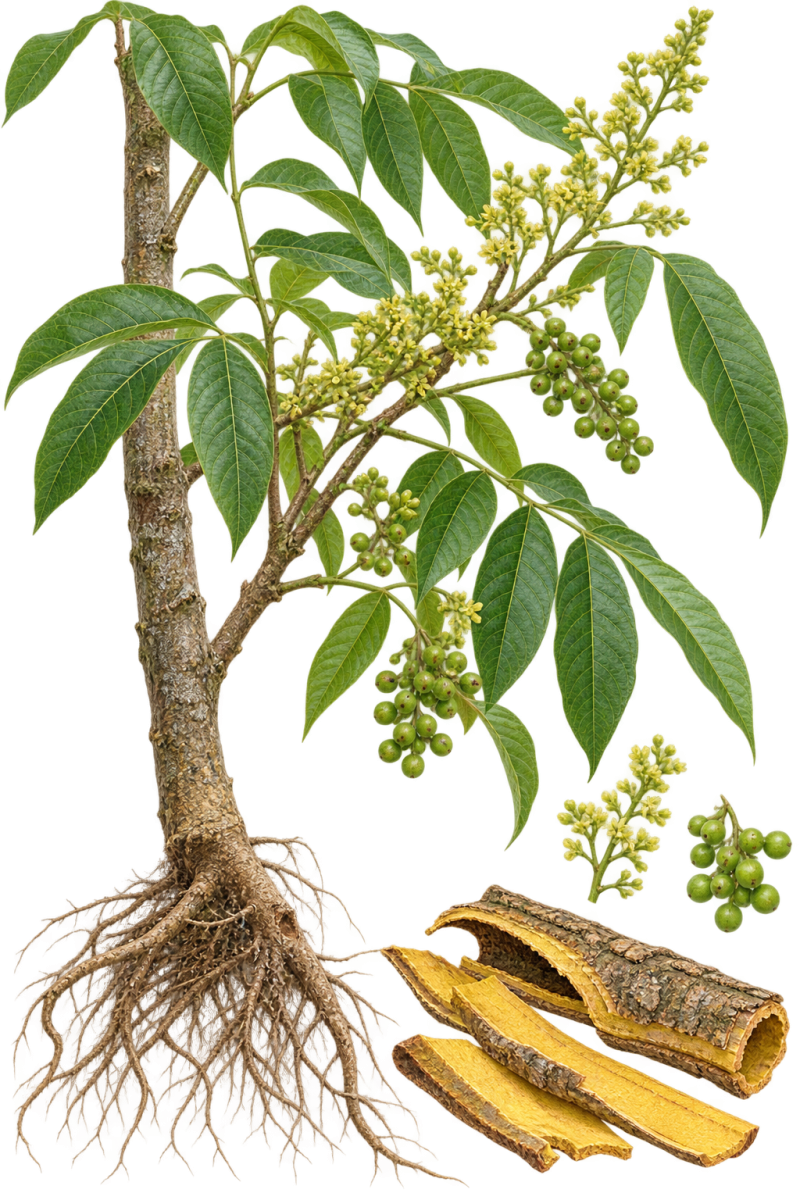
Huang Bai (Phellodendron amurense) is a bitter, cold herb used to clear heat, eliminate toxins, drain dampness, and nourish Yin. Its bioactive compounds—particularly berberine and related alkaloids—provide antimicrobial, anti-inflammatory, hypoglycemic, and hepatoprotective effects. Research also suggests benefits for lowering blood pressure, reducing fever, and preserving muscle mass in metabolic or wasting conditions.
Du Zhong (Eucommia Bark) is one of the most important traditional Chinese medicinal herbs, well-known for its powerful ability to tonify the Liver and Kidneys, strengthen bones and tendons, and support pregnancy. The bark of Eucommia ulmoides is rich in bioactive compounds such as alkaloids, triterpenoids, saponins, flavonoids, vitamins, and essential minerals, giving it a wide range of therapeutic benefits. Du Zhong is commonly used in formulas that treat lower back pain, weak knees, joint degeneration, osteoporosis, as well as nocturnal emission, impotence, and frequent urination caused by Kidney deficiency. In gynecology and obstetrics, Du Zhong is highly valued for its ability to stabilize pregnancy, prevent miscarriage, and strengthen the overall condition of pregnant women. The herb also helps lower blood pressure, reduce cholesterol, and promote vasodilation, making it beneficial for cardiovascular health. Thanks to its anti-inflammatory and strong antioxidant effects, Du Zhong enhances immune function, protects nerve cells, regulates blood sugar, and supports lipid metabolism—making it suitable for individuals at risk of diabetes or metabolic disorders. Modern research further shows that Eucommia leaves offer similar medicinal effects to the bark, providing a more convenient alternative. Du Zhong can be used in various forms such as decoction, medicinal wine, powder, or herbal extract, making it versatile for different wellness needs. Although generally safe, it should be used with caution in individuals with yin deficiency heat or latex allergies. With its wide-ranging therapeutic properties, Du Zhong has become a highly valued herb for supporting bone health, reproductive health, cardiovascular function, and immunity.
Black Sesame (Hei Zhi Ma) is one of the most revered herbal foods in traditional Eastern medicine, with a history of use spanning thousands of years in health preservation, nourishment, and preventive care. Far beyond a nutrient-rich seed, black sesame has long been documented in classical medical texts for its ability to tonify the Liver and Kidney, nourish essence and blood, and support long-term vitality, making it especially valuable for individuals experiencing physical weakness, premature aging, or prolonged recovery. From a modern scientific perspective, black sesame stands out for its high content of unsaturated fatty acids, bioactive lignans (sesamin, sesamolin), vitamin E, trace minerals, and powerful antioxidants. These compounds contribute to comprehensive benefits across multiple body systems, including digestive health, cardiovascular function, nervous system support, endocrine balance, immune resilience, and skin and hair vitality. When used appropriately, black sesame helps support chronic constipation, metabolic balance, liver health, anti-aging processes, and promotes strong, dark hair and radiant skin from within. What truly differentiates black sesame from many other herbal ingredients is its neutral nature, sweet and oily flavor, and non-toxic profile, allowing it to be seamlessly integrated into daily nutrition, traditional herbal formulas, medicinal oils, and natural wellness practices. This rare balance between traditional wisdom and modern nutritional science positions black sesame as a cornerstone ingredient in today’s global movement toward integrative medicine and sustainable health optimization.
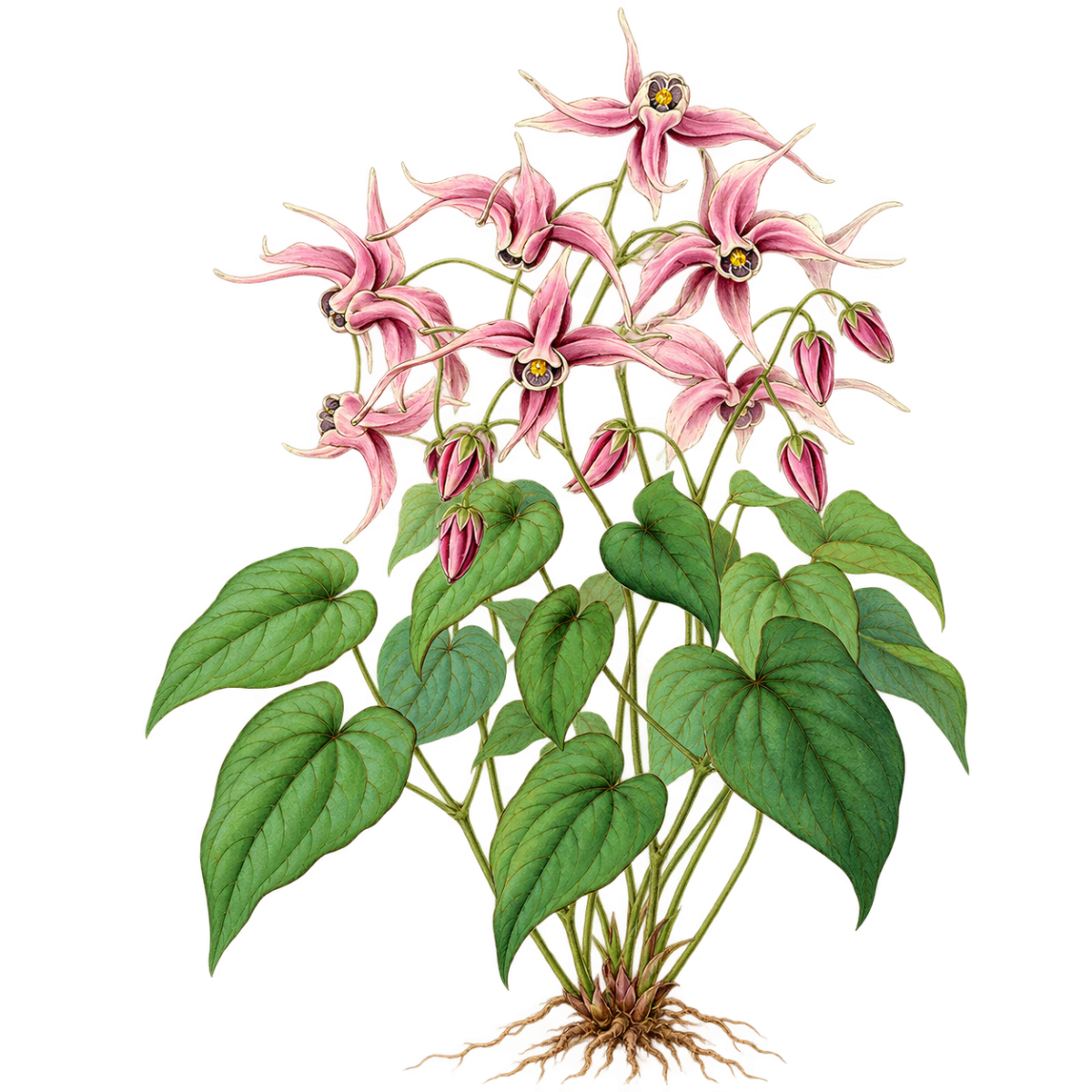
YIN YANG HUO (Epimedium Leaf, Epimedii Folium) is a well-known herb in Traditional Medicine, commonly associated with the functional profile of “warming the Kidney and supporting yang, strengthening tendons and bones, dispelling wind and eliminating dampness.” In materia medica terms, Yin Yang Huo is described as pungent and sweet in taste, warm in nature, and entering the Liver and Kidney channels—often considered when building constitutional support for vitality, musculoskeletal resilience, and long-term wellness. In traditional practice, it is frequently combined within classical-style formulas to support stamina, address low back and knee weakness, promote tendon-and-bone strength, and ease discomfort patterns linked to wind–damp influences. For musculoskeletal care, Epimedium is also widely discussed as part of a holistic approach for individuals concerned about bone health, especially when paired with appropriate movement, nutrition, and synergistic herbs. In modern herbal product development, Epimedium (Epimedii Folium) is commonly found in standardized extracts designed for men’s wellness, performance support, and bone-and-joint maintenance. When choosing a product, prioritize transparent sourcing, quality testing, clear labeling (Epimedii Folium/Epimedium leaf), usage instructions, and safety warnings to ensure responsible use.